
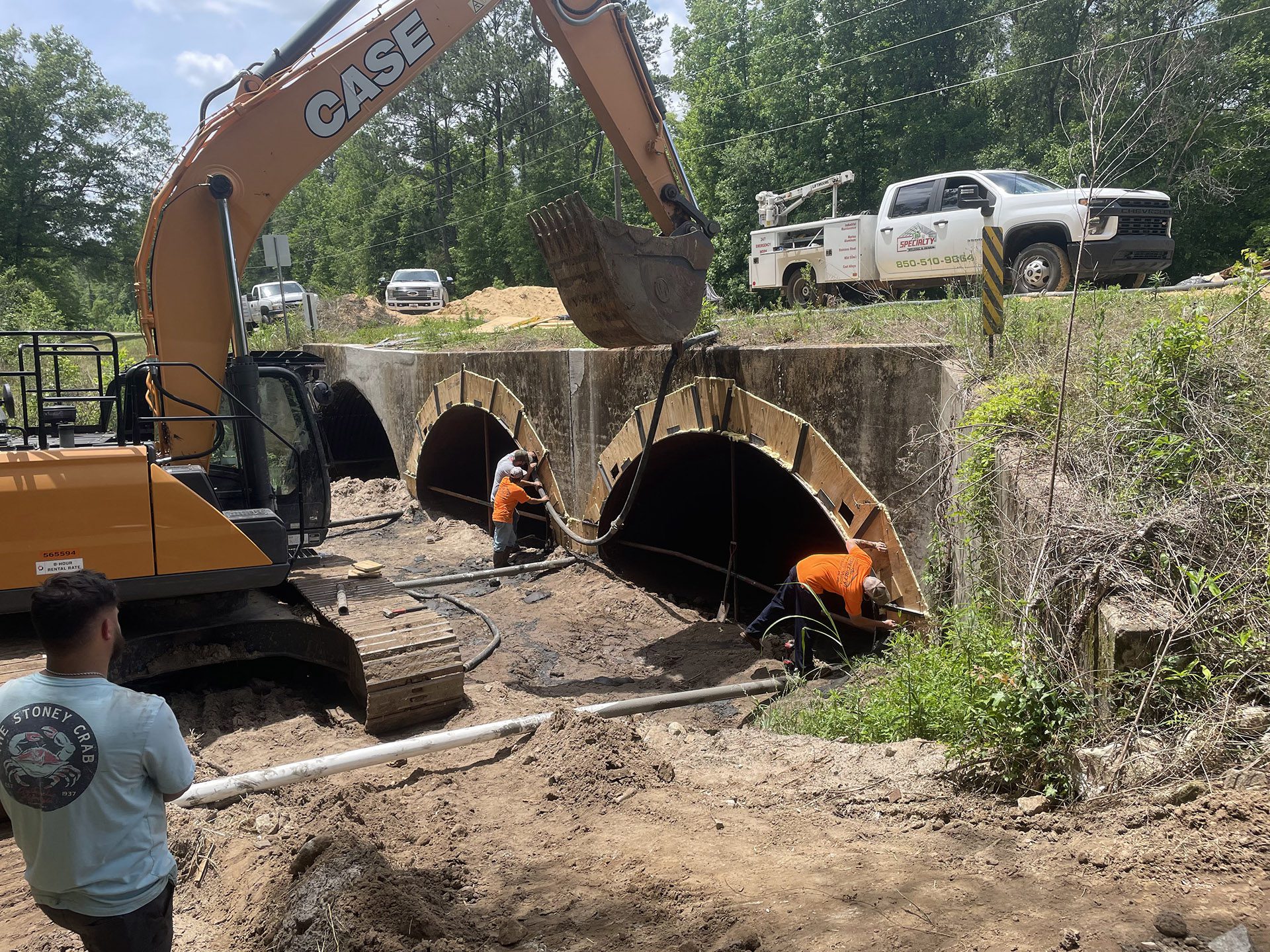
Post-installation performance data is beginning to separate engineered culvert liners from catalog-fit products, and procurement frameworks that ignore the difference are quietly accumulating liability.
In recent years, state DOTs started publishing something they hadn’t had before in any meaningful volume, which was multi-year post-installation performance data on culvert rehabilitation projects. The numbers were uneven. Some rehabilitated culverts were performing exactly as designed, holding up structurally and hydraulically after a decade or more in service. Others, installed with products that met the minimum dimensional requirements on paper, were showing signs of distress well inside their expected design life. That divergence was quiet at first, buried in asset management databases and maintenance logs, but it is becoming harder to ignore as agencies face a second round of capital decisions on the same assets.
The pattern emerging from this data points to a split that most procurement frameworks have not yet caught up with: a split between culvert liner systems that are engineered to the specific hydraulic, structural, and geometric conditions of a given site and products that are selected from a catalog based primarily on nominal diameter and unit cost. That distinction may sound like a technical nuance, but its downstream effects on asset performance, warranty exposure, and total cost of ownership are significant enough to reshape how agencies should be thinking about rehabilitation budgets over the next decade.
A properly designed culvert lining project should meet the design criteria of a new installation by meeting the hydraulic, load rating and design life requirements of a new structure. For this to be accomplished the asset owner’s design team or consulting engineers must consider all culvert lining options and choose the system that provides the best possible solution.
The Data Signal That Matters
The clearest evidence of the split comes not from product marketing but from the growing body of state DOT research and engineering guidance that has started to differentiate between liner products based on how they are specified. The National Academies’ research on practices to enhance resiliency of existing roadway drainage infrastructure identifies the importance of matching rehabilitation solutions to site-specific conditions, including hydraulic capacity, structural loading, and remaining service life of the host structure [1]. Separately, asset management research published through ResearchGate has documented how drainage infrastructure performance varies significantly based on the degree to which rehabilitation design accounts for local conditions such as soil type, groundwater, traffic loading, and inlet and outlet geometry [2].
What these sources point to, and what field experience consistently confirms, is that the performance gap between a liner system designed for a specific culvert and one sized from a standard product table is not marginal; it shows up in joint integrity, annular space management, hydraulic capacity retention, and long-term structural adequacy under actual loading conditions. The problem is that most procurement specifications do not yet draw this line clearly, which means agencies are often evaluating bids on unit cost without a mechanism to weigh the engineering rigor behind the product being offered.
An example would be when asset owners solicit bids for culvert liners by size only. Round liners are often compared by nominal sizing without paying attention to the hydraulic opening. For instance, a 48” diameter polyethylene liner may in some cases be cheaper than an InfraSteel liner, yet it has a thicker wall than a 48” InfraSteel liner. Consequently, the cross-sectional area of the polyethylene liner is smaller than the steel liner, leading it to underperform hydraulically in high volume weather driven events.
Why This Gap Exists and Why It Persists
Catalog-fit products are not inherently bad. Many of them are perfectly adequate for straightforward applications where the host pipe is round, the grade is consistent, the structural demands are moderate, and the hydraulic requirements leave comfortable margin. But a large share of culverts needing rehabilitation are not straightforward. They are elliptical, arched, or irregularly deformed. They carry significant structural load under active roadways or rail lines. They have complex inlet or outlet conditions, fish passage requirements, or hydraulic constraints that a standard-diameter liner cannot address without compromising capacity or creating failure points.
The deeper reason the gap persists is institutional. Procurement frameworks in most agencies evolved to handle commodity products, items where you can write a specification around a standard dimension and a material grade and reasonably expect equivalent performance from any qualified supplier. That approach works well for concrete pipe, guardrail, or asphalt mix. It works less well for rehabilitation systems where critical engineering happens not in the manufacturing of the product but in the design of the system for a specific site. When you flatten that distinction in a bid tab, you are asking evaluators to treat a site-engineered structural system the same way they treat a commodity material. The lowest unit cost almost always wins, regardless of whether the engineering behind it is adequate for the conditions.
I’m oversimplifying it somewhat, because there are agencies that have developed more nuanced specifications, and some state DOTs have begun requiring site-specific hydraulic and structural analysis as part of the rehabilitation design submittal. But those are still the exception rather than the norm, and the default procurement path at most agencies still treats culvert liners as interchangeable catalog items.
Separating Signal from Noise in the Rehabilitation Market
There is a lot of marketing energy in the culvert rehabilitation space right now, driven in part by the flow of federal infrastructure dollars into state and local agencies. Some of that energy is genuinely useful, particularly the growing body of cost-effectiveness research that demonstrates rehabilitation’s advantages over full replacement in terms of reduced traffic disruption, lower environmental impact, and faster project delivery [3]. The case for rehabilitation over replacement is strong and well-supported by evidence, and agencies should feel confident that the general approach is sound.
Where the noise gets louder is around claims of material equivalence and universal applicability. You will hear that a particular liner material or product family is suitable for essentially any culvert rehabilitation application, that installation speed is the primary differentiator, or that design life is guaranteed by the material itself rather than by the engineering of the system. These claims deserve scrutiny. Design life is not a property of a material in isolation. It depends on how the material is configured, how it interacts with the host structure, how annular space is managed, how joints perform under load and settlement, and whether the hydraulic design accounts for the actual flow conditions at that site. Put a 75-year material into a 50-year system design and you get a 50-year asset, not a 75-year one.
The evidence supports a narrower and less marketable conclusion: rehabilitation systems perform well when the engineering matches the site conditions, and they underperform when it does not, regardless of what material the liner is made from. That won’t fit on a trade show banner, but it is the conclusion the post-installation data actually supports.
What This Means for Different Stakeholders
For agency directors and asset management leads, the implication is primarily about how you structure specifications and evaluate bids. If your current procurement framework evaluates culvert rehabilitation bids on unit cost per linear foot without requiring a site-specific engineering submittal that addresses hydraulic capacity, structural adequacy under actual loading, and design-life assumptions tied to the installed system rather than the raw material, you may be systematically selecting lower-performing solutions. That does not show up as a problem in year one or year five, but it starts showing up as premature maintenance needs, reduced hydraulic capacity during storm events, and eventual re-rehabilitation or replacement costs that were not in the original capital plan.
For practitioners, the engineers and project managers who write specifications and review submittals, the implication is that the specification itself needs to do more work. A good liner rehabilitation specification should require the liner manufacturer to demonstrate, through engineering analysis rather than just product data sheets, that the proposed system meets the site-specific requirements for hydraulic capacity retention, structural performance under the actual fill height and traffic loading, joint performance under anticipated settlement, and design life as an installed system. That is more work on the front end, but it is dramatically less expensive than dealing with a premature failure on the back end.
For budget planners and finance leads, the key issue is total cost of ownership. A liner system that costs more per linear foot but delivers a genuine long-term service life without interim maintenance is a fundamentally different asset than one that costs less upfront but requires intervention well before its expected design life. The capital planning models most agencies use do not yet distinguish between these two outcomes in a systematic way, which means the lower-cost option looks better on paper even when it is more expensive over the life of the asset.
A Framework for Tracking This Trend
Rather than offering a checklist, I want to suggest a way of thinking about this that remains useful even as the data evolves. The core question for any agency evaluating culvert rehabilitation procurement is whether the specification requires the bidder to demonstrate engineering adequacy for the specific site or whether it accepts product-level claims as sufficient. You can apply that question across four dimensions that tend to predict long-term outcomes.
The first dimension is hydraulic: does the proposed liner system maintain adequate flow capacity given the reduction in cross-sectional area, the specific grade, and the design storm event for that location? The second is structural. The liner needs to carry the actual loads at that site, including fill height, live load, and any asymmetric loading from skewed installations or poor bedding conditions. Third, geometry. The liner geometry has to match the host pipe closely enough to allow proper annular space grouting and joint performance, rather than relying on oversimplified assumptions about the host pipe’s condition. Finally, there is durability as a system, which asks whether the design-life claim is based on the installed system’s performance, including joints, grout, and interaction with the host structure rather than on the material alone.
A bid submittal that addresses all four of those dimensions with site-specific engineering is probably offering a system that will perform as promised. One that addresses them with generic product data is offering a catalog-fit product that may or may not be adequate for the conditions, and there is no engineering basis for knowing which.
The Second-Order Effect Most People Are Missing
Most of the conversation in the culvert rehabilitation market focuses on the initial capital decision, replacement versus rehabilitation, and on the unit cost of the liner itself. That is where the budgets are visible and where the procurement battles happen. But the more consequential effect of the engineered-versus-catalog split may be showing up somewhere else entirely, in the asset management databases that agencies use to plan future capital needs.
When an agency rehabilitates a culvert with a catalog-fit liner and records it as a completed rehabilitation with an assumed 50- or 75-year service life, that asset drops out of the near-term capital plan. It is marked as addressed. If the actual installed system delivers only 20 or 30 years of service because the engineering was inadequate for the site, the asset will re-enter the capital plan decades earlier than expected, but by then the original project team is long gone, the institutional memory of what was actually installed has faded, and the agency faces the cost of re-rehabilitating or replacing a structure it thought it had already fixed. The research on asset management approaches for drainage infrastructure highlights exactly this risk, noting that the accuracy of remaining-service-life estimates depends heavily on the quality of the original rehabilitation design and the degree to which it accounts for site-specific deterioration mechanisms [2].
That is the liability that rarely gets discussed in procurement debates. It is not a warranty claim or a construction defect but a slow-motion capital planning error that compounds across hundreds or thousands of culvert assets in an agency’s inventory. If this trend continues, the real disruption will not be which liner material wins the market; it will be whether agencies can trust the service-life assumptions in their own asset management systems, and the answer to that question depends almost entirely on whether the rehabilitation was engineered for the site, or selected from a catalog.
The author is an executive at InfraSteel, a manufacturer of site-specific smooth-wall carbon steel slip-liner systems for culvert and bridge rehabilitation, based in Irondale, Alabama. The company engineers custom liner systems to meet site-specific hydraulic, structural, and geometric requirements for transportation agencies and infrastructure owners across the United States.
───────────────────────
References
[1] Practices to Enhance Resiliency of Existing Roadway and … — www.nationalacademies.org
[2] An asset management approach for drainage infrastructure … — www.researchgate.net
[3] How Culvert Rehabilitation Is The Most Cost-Effective Solution … — www.obicproducts.com


Leave A Reply